Zoom vs Prime Lenses: Which Should Beginners Buy First?

Buying a first lens is the point where photography stops being something that happened to you and starts being something you chose. The camera body sets a ceiling; the lens decides what you can actually do on a grey Tuesday afternoon in November. And almost straight away you meet the fork in the road: zoom or prime?
One lens covers a range of focal lengths at the twist of a barrel. The other covers a single focal length and asks you to move your feet. Both are correct answers, for different photographers. Here is the honest version of the trade-offs, so you can spend once and spend well.
A standard zoom such as an 18–55mm on APS-C, or a 24–70mm on full frame, runs from moderately wide to short telephoto. On a family day out you can photograph a whole room, then a face across the table, without changing anything but your grip. Travel, weddings, school plays, sport from the sidelines — zooms earn their keep wherever the subject moves and you cannot.
The trade-off is usually light. Kit zooms typically open to f/3.5 at the wide end and f/5.6 at the long end. That is perfectly workable outdoors in daylight and awkward the moment the sun drops or you step indoors. Fast zooms with a constant f/2.8 aperture solve the problem, but they cost considerably more and weigh a good deal more too.
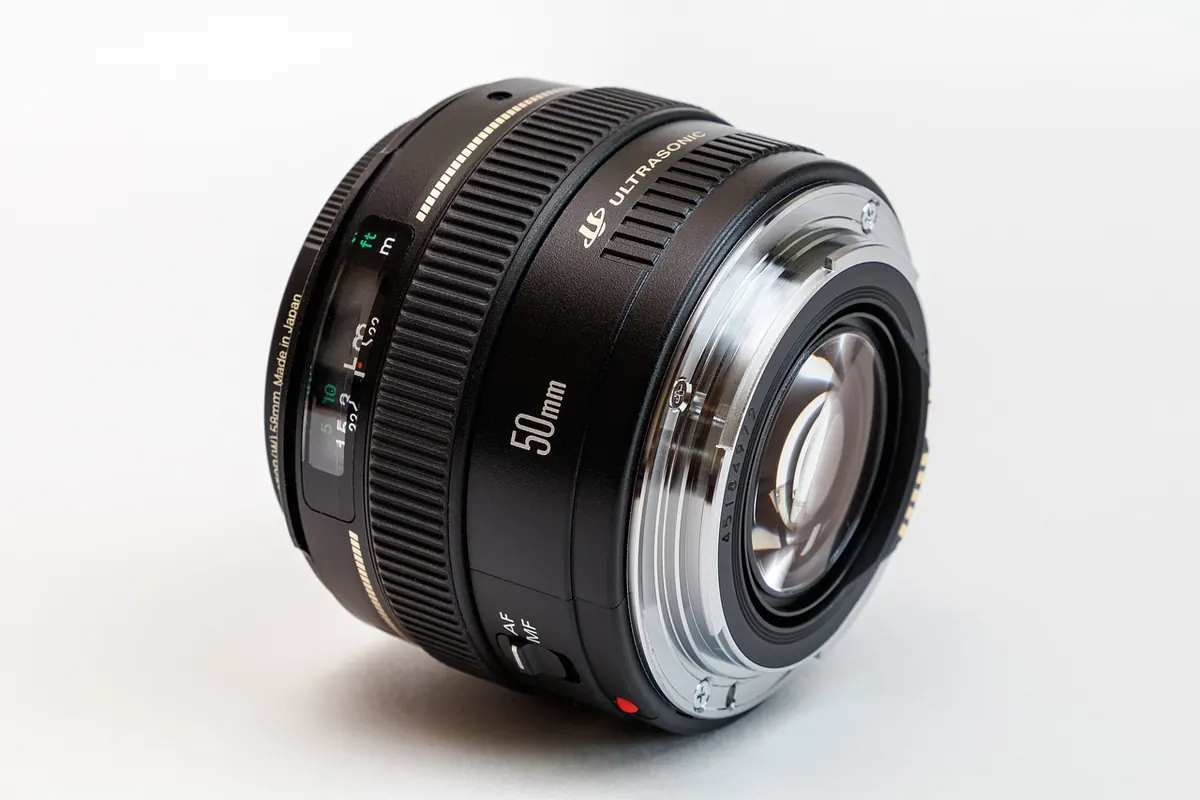
A 50mm f/1.8 prime gathers roughly three stops more light than an f/5.6 zoom at the same focal length. Three stops is the difference between a shot you can hand-hold and one that smears into blur, or between ISO 400 and ISO 3200 in a dim living room. That matters far more to most beginners than a marginal sharpness gain.
There is an optical argument as well. A prime is designed around one focal length, so the designer makes fewer compromises: cleaner corners, less distortion, and often smoother out-of-focus areas. This is a general tendency, not a law — a good zoom beats a poor prime every time — but at similar prices, primes usually deliver the more pleasing file.
The wide aperture is also a creative tool. Shallow depth of field is what separates a portrait from a snapshot: your subject crisp, the background falling into soft colour.
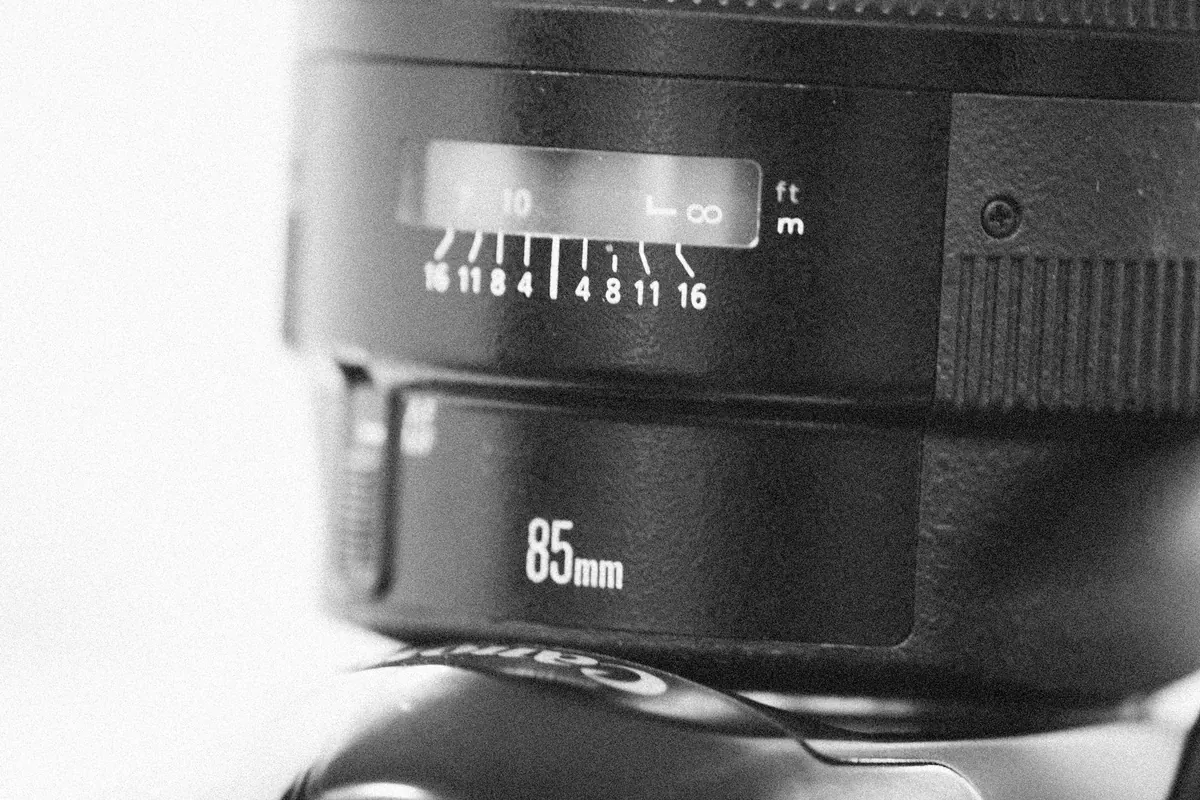
The entry costs are wildly uneven. A kit zoom often arrives bundled with the body, effectively cheap. An 85mm f/1.8 or a 50mm f/1.8 is one of the best-value purchases in photography — plasticky build, audible autofocus, genuinely lovely images. A constant-aperture zoom sits at the other end, often costing more than the camera you would put it on.
So the realistic beginner positions look like this:
If money is tight, put it into the lens you will use weekly rather than the one that looks impressive in a specification table.
A prime forces you to zoom with your feet, and that is a feature. After a month with a 35mm you start to know what a scene will look like before you raise the camera. You learn what a wide angle does to a face up close, and why stepping back three paces flatters it. That intuition transfers to every lens you ever own.
A zoom lets you stand still and frame instead. Convenient, but you can shoot happily for a year without ever asking why one framing works better than another. That is not an argument against zooms — they teach speed and decisiveness in fast situations, which primes do not — but it is an argument for deliberate practice.
Here is the cheapest trick available: set your zoom to a single focal length and leave it there for a whole day. One outing at 35mm, another at 85mm. You get the prime lesson without buying anything.
Ignore what is fashionable and look at your habits.
Notice that the answer is driven by light and distance, not by brand loyalty or review scores.
If you already own a kit zoom, you are not stuck. Add a cheap fast prime next, keep both in the bag for a while, and let your own photographs tell you which one keeps coming out. The best first lens is not the sharpest or the most expensive — it is the one you will actually carry, and the one that makes you want to go out again tomorrow.
Photo: MabelAmber / Pixabay
Previous Post
How to Choose Your First Prime Lens for UK Street Photography
Next Post
A 10-Point Checklist for Buying a Used Lens in the UK