Autumn Photography: Choosing the Right Lens for UK Woodlands
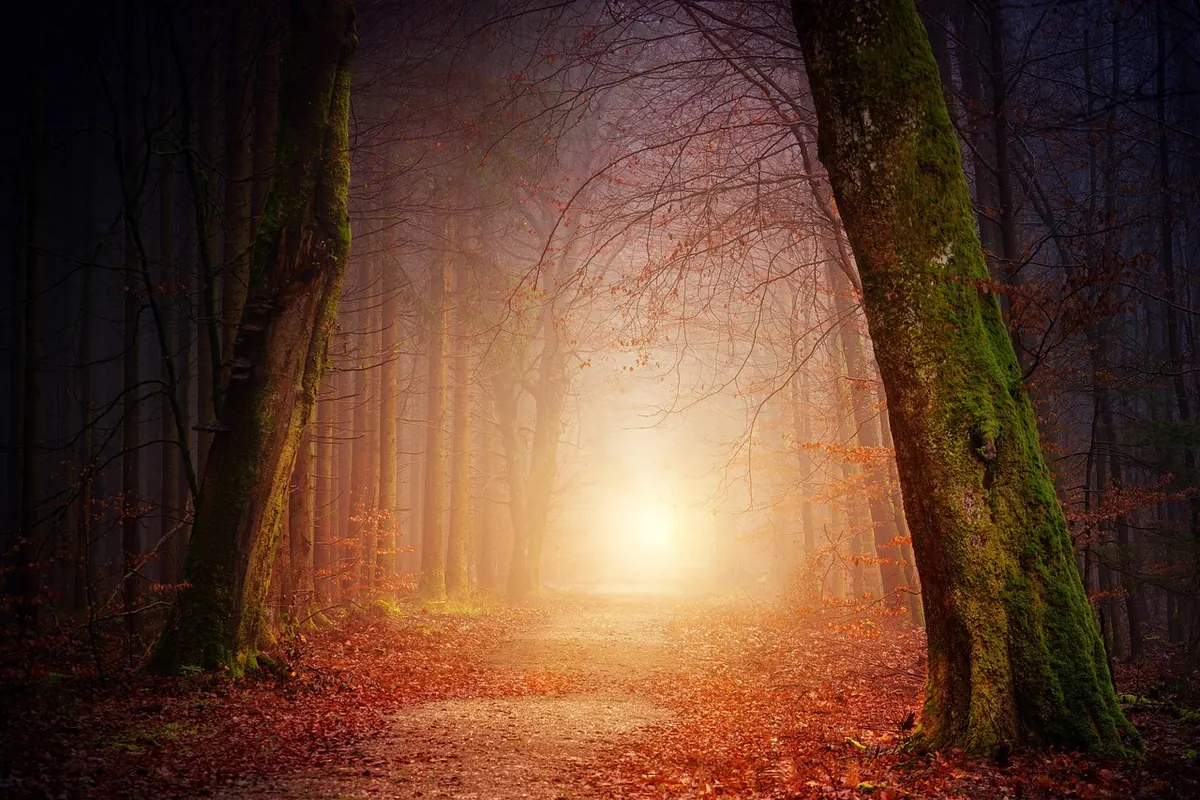
Autumn in a British wood rarely sits still for long. One week the beeches are still green with a bronze edge; the next, the canopy has thinned and the light comes through in flat, bright sheets. Then the mist arrives and the whole place looks as though you have never photographed it before. Lenses matter more now than at any other point in the year, because the pictures you are likely to want — a receding line of trunks in fog, a single leaf stuck to wet bark, a fungus glowing in the leaf litter — call for different focal lengths and different apertures.
Most autumn woodland photographs fail for one reason: the wrong lens behind the wrong idea. Before you leave the car, decide whether your subject is the space — depth, mist, layers of trunks — or the thing — one leaf, one mushroom, one patch of frost. Space photographs want either a wide lens or a long one, never a timid compromise in the middle. Thing photographs want close focus and a wide aperture. Settling this in the car park saves you swapping lenses in the rain.
Wide lenses do two jobs well in woodland. They let you get close to a foreground of fallen leaves while keeping a long run of trees legible behind, and they exaggerate the height of a canopy when you point them upwards.
There are practical limits. On full frame, 16mm is often too wide — trunk edges bow, and the frame fills with fiddly detail. Between 20mm and 28mm usually gives the drama without the mess. On a crop sensor, 10–18mm or 12–24mm gives a similar angle, and it is worth multiplying any focal length by roughly 1.5 to compare it with full-frame numbers.
Set f/8 to f/11 for the deep focus a woodland floor needs, put the camera low on a tripod and get within half a metre of the leaves. If there is a path, use it as a leading line and let trunks frame it. Expose for the brightest part of the sky and let the shadows fall where they may; that contrast is what autumn actually looks like.
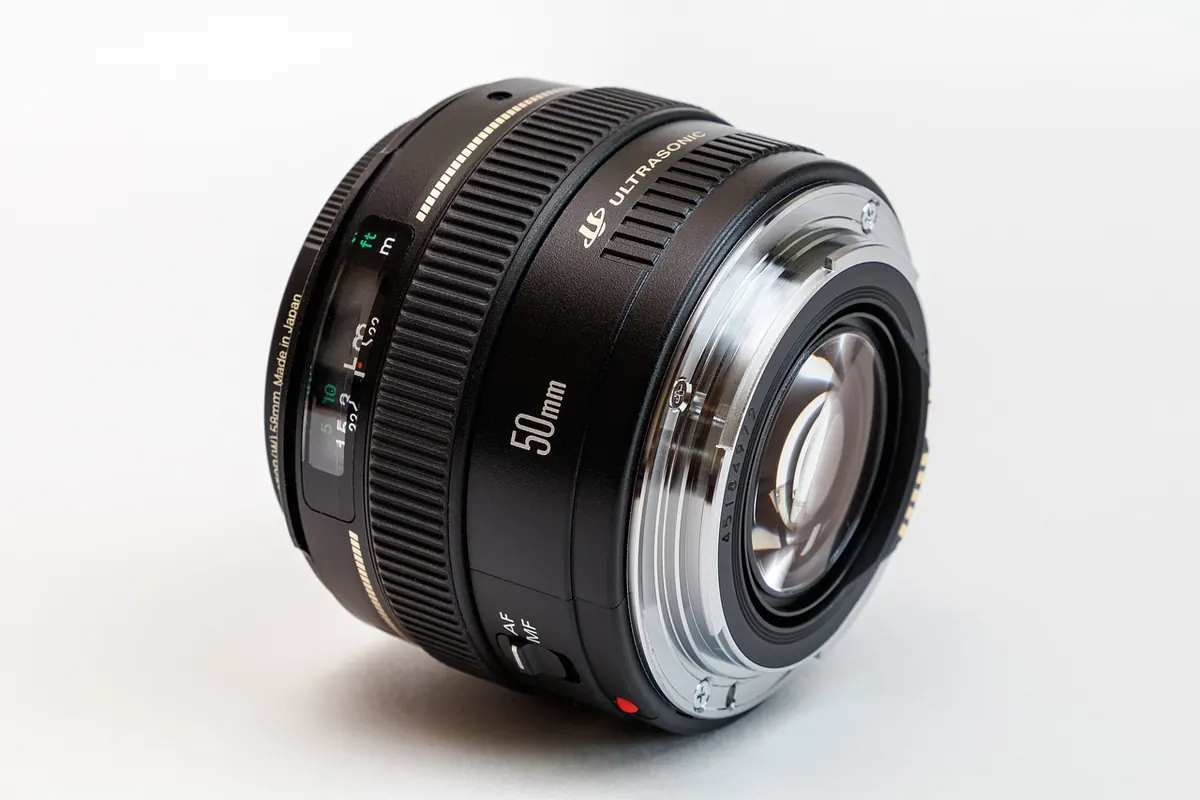
A 24–70mm or 24–105mm will live on the camera for most of the season. It covers the path-and-trunks shot at the wide end and a single branch at the long end, and it usually focuses close enough for a decent detail of a leaf on a fence post. A 35mm or 50mm prime is faster, lighter and often sharper, which matters in a wood at seven in the morning when light is scarce. A 35mm f/1.8 on a crop body, or a 50mm f/1.8 on full frame, can be the difference between shooting at ISO 400 and ISO 3200.
Mist is the reason to carry a telephoto. A long lens compresses distance, stacking the bands of fog between trunks into something far more graphic than the same scene shot at 24mm. A 70–200mm is the standard choice; a 100–400mm lets you pick one crown of leaves out of the canopy and isolate it against something pale.
Shoot with the sun behind the subject, or at least behind and to one side, so trunks become dark shapes against a glowing background. Expose for those highlights and expect to lose shadow detail — that is the look. Work between f/4 and f/5.6. You rarely need more depth when the layers themselves provide the separation, and the wider aperture keeps shutter speeds usable in low light. Treat 1/focal length as your minimum handheld speed and lean on stabilisation where you have it.
Autumn rewards close focus. A 90mm or 100mm macro is the obvious tool, but you do not need one: extension tubes on a 50mm, or a close-focusing zoom that gets within a few centimetres, will produce a half-life-size image that prints perfectly well.
Approach the subject at its own level. A tripod that splays flat, or a beanbag, lets you set the camera down in the leaf litter and shoot along the ground. For a fungus, focus on the front edge of the cap at f/5.6–f/8; if you want the whole thing sharp from front to back, take three or four frames at different focus points and combine them later. Caps catch every breath of wind, so shield them with your body and shoot early, before the light turns harsh. A diffuser, or a piece of white card held on the shadow side, does more for a close-up than any filter.
Three quick rules for your next woodland walk. If the forecast says mist, take the longest lens you own and a tripod. If the ground is thick with leaves, take the widest lens you own and be willing to lie down. If you want the small things — fungi, frost, veins in a leaf — take the closest-focusing lens you own and something to steady it.
Then add the unglamorous kit: a polarising filter to cut glare on wet leaves, a microfibre cloth, a rain cover, and a spare battery kept warm in a pocket, because the cold drains them faster than you expect. After that it is simply a matter of working the wood slowly, checking the light, and going back the following week, when it will all look different again.
Photo: jplenio / Pixabay
Previous Post
Five Common Mistakes When Shooting with a Wide-Angle Lens
Next Post
A Lens Kit for UK Coastal Photography: What to Pack for Seascapes